Tom Yum Goong
Thai Recipe
Overview
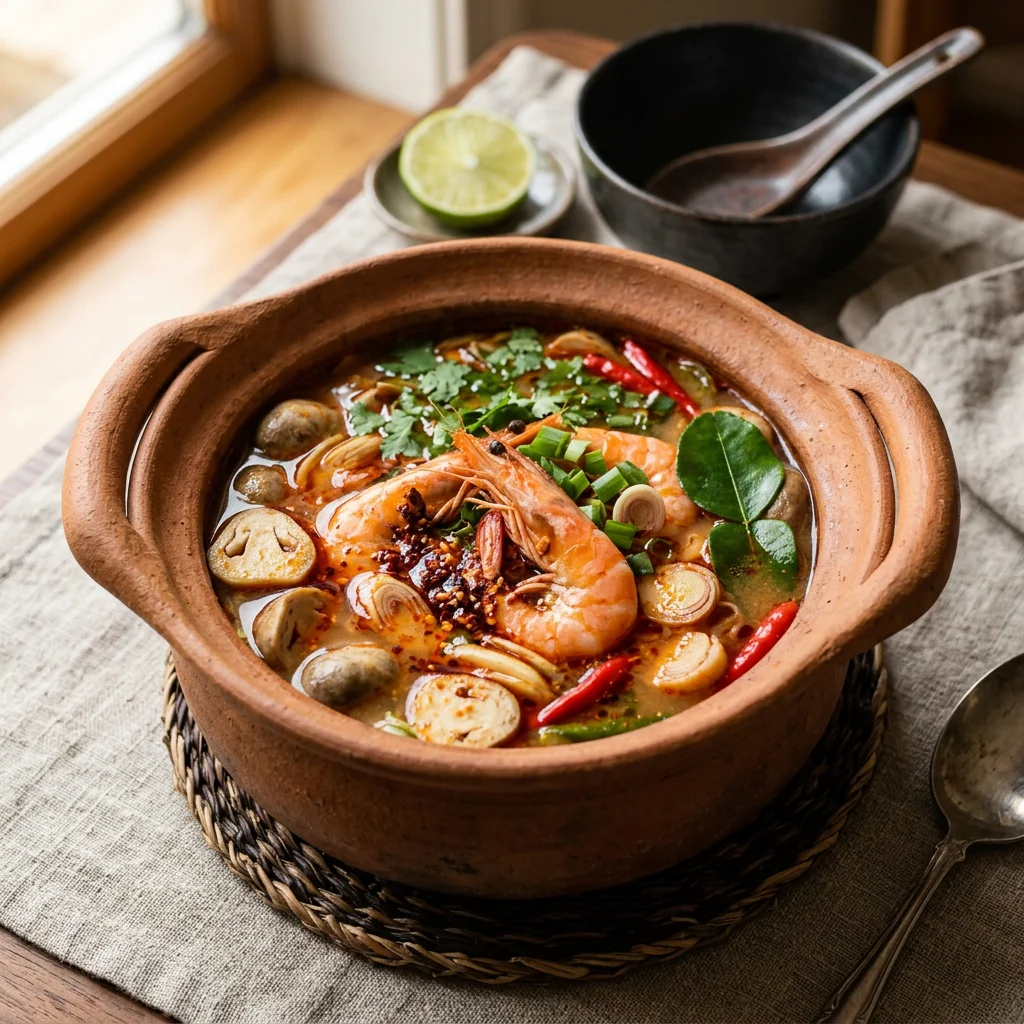
Tom Yum Goong is Thailand's celebrated hot and sour shrimp soup — a bracing, clear broth alive with lemongrass, galangal, kaffir lime, and chili, with plump shrimp bobbing in a pool of liquid fire tempered by lime and fish sauce. The name breaks down simply: tom (boil), yum (mixed sour-spicy salad), goong (shrimp). It is one of the most recognized soups in the world, and its particular balance of sour, salty, spicy, and aromatic has no equivalent in Western cuisine. The soup exists in two primary versions: Tom Yum Nam Sai (clear broth) and Tom Yum Nam Khon (creamy, with roasted chili paste and a splash of evaporated milk). Both begin with the same aromatic base, but the creamy version has a richer mouthfeel that tempers the aggressive sour-spicy punch. The clear version is the more traditional and the more medicinally potent — its transparency means you taste every ingredient distinctly. Ayurvedically, Tom Yum is almost pure agni medicine. The combination of galangal, lemongrass, and chili creates a pungent, heating, sharp stimulus that directly kindles digestive fire and clears stagnation from the channels. Thai traditional healers have long recommended a bowl of spicy Tom Yum at the first sign of a cold — the volatile oils in the aromatics open the respiratory passages while the heat promotes sweating and the elimination of toxins.
Strongly pacifies Kapha and Vata when the body is cold or congested. Significantly increases Pitta. Best used medicinally rather than as a daily food for Pitta-dominant individuals.
Traditional Thai cold and flu remedy. The volatile oils from galangal and lemongrass open respiratory passages, the chili promotes sweating and toxin elimination, and the hot broth hydrates and flushes the system. Also used to stimulate appetite during digestive weakness.
Ingredients
- 400 g Large shrimp (shell-on, deveined; reserve shells for stock)
- 4 cups Water or light chicken stock
- 2 inches Galangal (sliced into thin coins)
- 3 stalks Lemongrass (cut into 2-inch pieces, bruised)
- 5 leaves Kaffir lime leaves (torn)
- 200 g Straw mushrooms (halved; or substitute oyster mushrooms)
- 5 whole Thai bird chilies (bruised with the flat of a knife)
- 3 tbsp Fish sauce
- 4 tbsp Fresh lime juice
- 1 tsp Palm sugar (just enough to round the edges)
- 3 tbsp Fresh cilantro (leaves, for garnish)
- 1 tbsp Thai chili paste (nam prik pao) (optional, for the creamy version)
Instructions
- If using shell-on shrimp, peel and devein the shrimp, reserving the shells. Simmer the shells in the stock or water for 10 minutes, then strain. This creates a deeply flavored shrimp base.
- Bring the strained stock to a boil. Add the galangal, lemongrass, kaffir lime leaves, and bruised chilies. Boil for 3-4 minutes to extract the essential oils into the broth.
- Add the mushrooms and cook for 2 minutes until just tender.
- Add the shrimp and cook for 2-3 minutes until they curl and turn pink. Do not overcook — shrimp should be just opaque through the center.
- Remove from heat immediately. Stir in the fish sauce, lime juice, and palm sugar. For the creamy version, stir in the chili paste at this point. Taste and adjust — the broth should be aggressively sour and spicy, tempered by the salty fish sauce.
- Ladle into bowls with the aromatics included. Garnish with fresh cilantro. Serve steaming hot, ideally with a bowl of jasmine rice alongside.
How This Recipe Affects Each Dosha
Vata
The warming broth and pungent spices can be therapeutic for cold, stagnant Vata conditions — clearing ama and kindling weakened agni. However, the light, sharp, dry qualities of the clear broth without coconut or fat can aggravate Vata if consumed frequently. Best as an occasional medicinal soup, not a daily staple.
Pitta
This soup is powerfully Pitta-aggravating. The intense chili heat, sour lime, heating galangal, and pungent lemongrass all drive Pitta upward. The clear, sharp broth offers no cooling counterbalance. Pitta types should approach Tom Yum cautiously, especially during summer or periods of inflammation.
Kapha
Tom Yum is one of the best soups for Kapha. Every quality works against Kapha stagnation: the broth is light, clear, sharp, and intensely heating. The pungent aromatics cut through mucus and open the channels. The absence of heavy fats or starches keeps the meal light and stimulating. Excellent during spring congestion or winter sluggishness.
One of the most potent agni-kindling soups in any cuisine. The combination of galangal, lemongrass, chili, and lime directly stimulates digestive fire and promotes the breakdown of accumulated ama. The clear, hot broth flushes the digestive tract like a warm cleansing wave.
Nourishes: Rasa (plasma), Rakta (blood)
Adjustments by Constitution
For Vata Types
Add a generous splash of coconut milk to create the creamy version, which adds the oily, heavy, sweet qualities that Vata needs. Reduce the chilies to two. Use bone-in chicken alongside the shrimp for deeper nourishment. Serve over jasmine rice rather than alongside it, so the warm starch absorbs and grounds the broth.
For Pitta Types
Significantly reduce or omit the chilies. Replace half the galangal with fresh ginger, which is milder. Add a splash of coconut milk for cooling. Increase the kaffir lime leaves for fragrance without heat. Use less lime juice and more fish sauce to shift the balance from sour toward salty. Add fresh cilantro generously.
For Kapha Types
Double the chilies and galangal. Omit any coconut milk or creamy additions entirely — keep it as the clear Nam Sai version. Add thinly sliced daikon radish and leafy greens like bok choy. Reduce the palm sugar to zero. A few drops of roasted chili oil on top amplifies the metabolic heat.
Seasonal Guidance
Most therapeutic during cold-weather months and spring when respiratory congestion is common. In autumn, it counters early Vata cold with warming spice. In winter, it prevents stagnation and keeps channels clear. In spring, it powerfully breaks up Kapha accumulation. Avoid during the peak of summer or opt for a much milder version with minimal chili.
Best time of day: Lunch or as a medicinal soup at the onset of cold symptoms
Cultural Context
Tom Yum Goong was inscribed by Thailand on the UNESCO Intangible Cultural Heritage list in 2024, recognizing it as a dish of profound cultural significance. In Thailand, it is both everyday food and folk medicine — Thai mothers serve it at the first sign of a cold, Thai street vendors sell it from dawn to midnight, and Thai restaurants around the world use it as their signature offering. The dish likely evolved from the broader Southeast Asian tradition of sour-spicy broths, but Thailand refined it into the precise, aromatic form known today. The quality of a restaurant's Tom Yum is often used as a benchmark for the entire kitchen — if the Tom Yum is right, everything else will follow.
Chef's Notes
The aromatics are for infusing, not eating — leave galangal rounds and lemongrass pieces in the bowl for visual appeal and continued fragrance. The key to great Tom Yum is the lime juice going in OFF the heat — boiling it destroys the bright, sharp sourness and creates a flat, cooked citrus flavor. The shrimp shell stock is what separates a good Tom Yum from a great one; it adds an oceanic depth that water alone cannot provide. If you prefer the creamy version, nam prik pao (roasted chili jam) adds a smoky sweetness that transforms the character of the soup entirely.
Frequently Asked Questions
Is Tom Yum Goong good for my dosha?
Strongly pacifies Kapha and Vata when the body is cold or congested. Significantly increases Pitta. Best used medicinally rather than as a daily food for Pitta-dominant individuals. The warming broth and pungent spices can be therapeutic for cold, stagnant Vata conditions — clearing ama and kindling weakened agni. This soup is powerfully Pitta-aggravating. Tom Yum is one of the best soups for Kapha.
When is the best time to eat Tom Yum Goong?
Lunch or as a medicinal soup at the onset of cold symptoms Most therapeutic during cold-weather months and spring when respiratory congestion is common. In autumn, it counters early Vata cold with warming spice. In winter, it prevents stagnation and keeps cha
How can I adjust Tom Yum Goong for my constitution?
For Vata types: Add a generous splash of coconut milk to create the creamy version, which adds the oily, heavy, sweet qualities that Vata needs. Reduce the chilies to For Pitta types: Significantly reduce or omit the chilies. Replace half the galangal with fresh ginger, which is milder. Add a splash of coconut milk for cooling. Incr
What are the Ayurvedic properties of Tom Yum Goong?
Tom Yum Goong has Sour, Pungent, Salty taste (rasa), Heating energy (virya), and Pungent post-digestive effect (vipaka). Its qualities (gunas) are Light, Sharp, Warm, Clear. It nourishes Rasa (plasma), Rakta (blood). One of the most potent agni-kindling soups in any cuisine. The combination of galangal, lemongrass, chili, and lime directly stimulates digestive fire and promotes the breakdown of accumulated ama. The clear, hot broth flushes the digestive tract like a warm cleansing wave.
What should you eat today?
This recipe has specific effects on each dosha, and the right meal depends on more than general guidelines. Your constitution, the current season, your birth chart's active planetary period, what you ate yesterday, how you slept — it all matters.
With Personal Alignment, you get daily food and meal guidance tailored to:
- Your prakriti and current vikriti
- Your Vedic birth chart and active planetary cycles
- The season, weather, and time of day
- Your food preferences, allergies, and restrictions
- Your feedback — it learns what works for your body and adapts
Not a generic diet plan. A living system that gets smarter about you every day.