Tzatziki (Yogurt-Cucumber Dip)
Greek Recipe
Overview
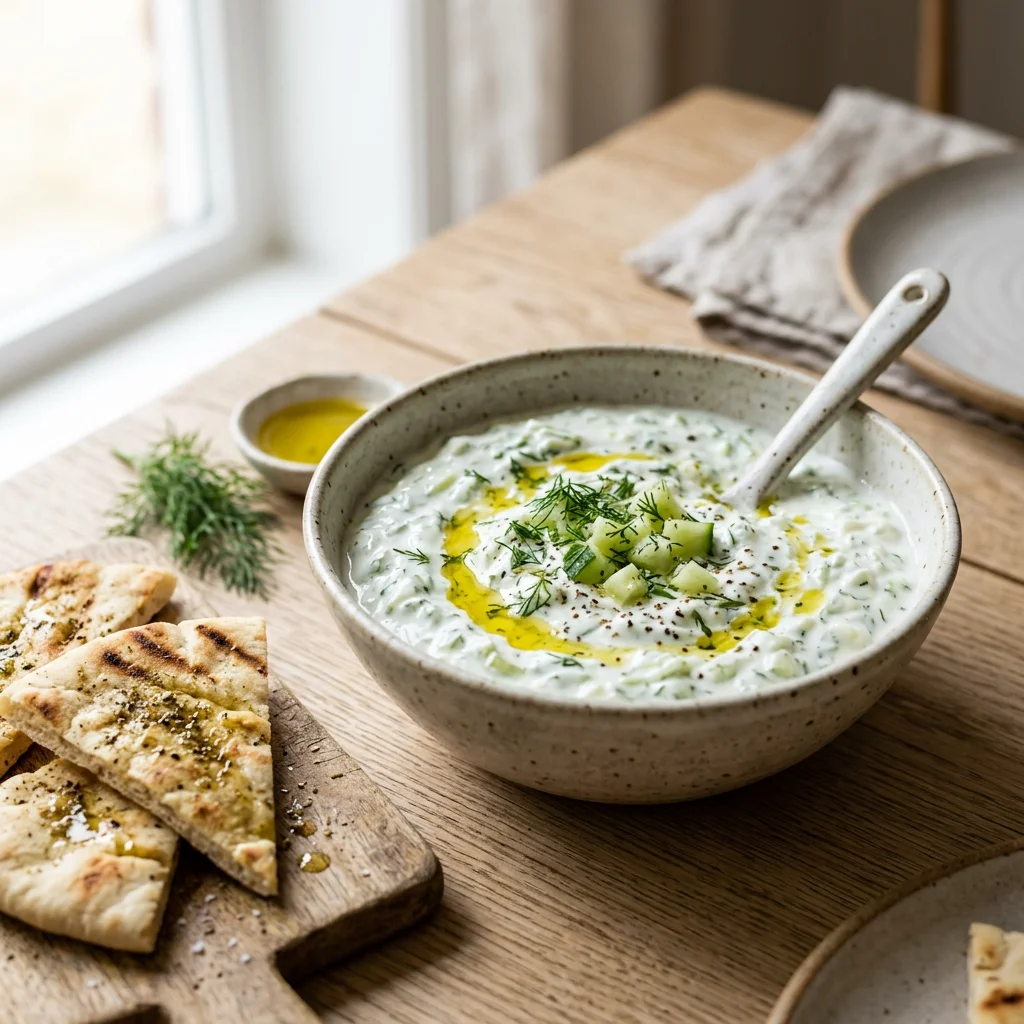
Tzatziki is the cooling heart of the Greek table — a thick, garlicky yogurt sauce studded with grated cucumber, fragrant with dill or mint, and sharpened with a splash of vinegar. It appears alongside nearly everything in Greek cuisine: grilled meats, fried vegetables, bread, and raw vegetables. More than a condiment, tzatziki is a balancing force, counteracting the richness of heavy foods and the heat of spicy ones with its cold, creamy presence. The base is strained Greek yogurt — thick enough to hold its shape — combined with cucumber that has been salted and squeezed dry. Garlic provides the punch, olive oil adds richness, and fresh dill or mint brings herbal brightness. The result is a preparation that is simultaneously refreshing and substantial, cool and pungent, simple and deeply layered. In Ayurvedic analysis, tzatziki embodies the cooling principle. Yogurt is inherently sour, heavy, and cooling; cucumber is among the most cooling of all vegetables; and fresh herbs moderate the heaviness. The garlic adds a pungent, heating counterpoint that prevents the preparation from becoming too cold and sluggish. This balance of cooling and pungent makes tzatziki more digestively intelligent than plain yogurt.
Strongly pacifies Pitta. Can increase Kapha due to heaviness and moisture. Mixed for Vata — the cold quality can aggravate, but the oil and heaviness help.
Ingredients
- 500 g Greek yogurt (full-fat, strained)
- 1 large Cucumber (grated and squeezed dry)
- 2 cloves Garlic (finely grated or crushed)
- 2 tbsp Extra virgin olive oil
- 1 tbsp Red wine vinegar
- 2 tbsp Fresh dill (finely chopped)
- 1 tsp Sea salt
- 1 tbsp Fresh mint (optional, finely chopped)
Instructions
- Grate the cucumber on the large holes of a box grater. Place in a clean kitchen towel or cheesecloth, sprinkle with half the salt, and squeeze firmly over the sink until no more liquid drips out. This step is critical.
- In a mixing bowl, combine the strained yogurt, squeezed cucumber, garlic, olive oil, and vinegar. Mix thoroughly.
- Add the dill (and mint if using) and remaining salt. Stir to combine.
- Taste and adjust salt and garlic. The flavor should be tangy, garlicky, and cool, with the herbs providing aromatic lift.
- Cover and refrigerate for at least 30 minutes before serving to let the flavors meld.
- Serve drizzled with a thread of olive oil and a sprig of dill. Accompany with warm pita bread or raw vegetables.
How This Recipe Affects Each Dosha
Vata
Tzatziki's cold, heavy quality can increase Vata when eaten in excess or in cold weather. However, the garlic provides warming pungency, and the olive oil adds grounding unctuousness. Best for Vata types in small amounts alongside warm foods, not as a standalone dish.
Pitta
Ideal for Pitta. The cooling yogurt and cucumber directly reduce heat, while the sour taste is satisfying without being inflammatory. The dill and mint add cooling aromatics. This is one of the best condiments for overheated Pitta constitutions during summer.
Kapha
The heavy, cold, moist qualities of yogurt and cucumber are Kapha-increasing. The garlic provides some benefit with its heating, penetrating quality, but the overall effect can promote congestion and sluggishness in Kapha types.
Can slightly dampen agni due to the cold, heavy quality of yogurt. The garlic counteracts this somewhat, kindling digestive fire through its pungent nature. Best consumed as a condiment rather than eaten in large quantities, which allows it to support digestion of accompanying foods without overwhelming agni.
Nourishes: Rasa (plasma), Mamsa (muscle), Asthi (bone)
Adjustments by Constitution
For Vata Types
Add extra garlic and a generous pinch of black pepper. Use the mint rather than dill (mint is more warming). Serve at room temperature rather than cold, alongside warm grilled bread.
For Pitta Types
This is already ideal for Pitta. For maximum cooling, use only dill (skip the garlic or use just one small clove). Add a squeeze of fresh lemon instead of vinegar.
For Kapha Types
Use low-fat yogurt and add extra garlic, black pepper, and a pinch of dried oregano. Reduce the olive oil. Consider adding grated radish alongside the cucumber for additional pungent, stimulating quality.
Seasonal Guidance
Tzatziki is a summer condiment par excellence. Its cooling quality makes it ideal during the hottest months when the body craves cold, refreshing foods and Pitta tends to accumulate. In autumn and winter, reduce consumption significantly — the cold quality can dampen agni and increase Vata. If serving in cooler months, use it sparingly as a sauce for grilled meats rather than eating it by the spoonful. Spring is acceptable in moderate amounts as temperatures begin to rise. Greek households transition naturally to tzatziki as summer arrives and put it away when autumn comes.
Best time of day: Midday, when digestive fire is strongest and can handle the cold, heavy quality
Cultural Context
Tzatziki is omnipresent in Greek cuisine, served at nearly every meal as a condiment, dip, or sauce. Its origins are debated — similar preparations exist across Turkey (cacik), the Middle East, and South Asia (raita), suggesting ancient roots in yogurt-based cuisines. In Greece, tzatziki is inseparable from souvlaki and gyros, but it also accompanies fried zucchini, baked potatoes, grilled fish, and simply bread. Every Greek home has its own version, and debates about garlic quantity, herb choice, and vinegar versus lemon are perennial. The dish represents the Greek genius for taking four or five humble ingredients and creating something greater than the sum.
Chef's Notes
Squeeze the cucumber mercilessly — watery tzatziki is the most common mistake. Greek cooks sometimes let the grated cucumber drain in a colander with salt for 30 minutes before squeezing, which draws out even more moisture. Use the best garlic you can find and grate it rather than mincing, which creates a smoother texture. Tzatziki should rest in the refrigerator before serving; the garlic mellows and the flavors integrate. It keeps for 2-3 days refrigerated but the garlic intensifies, so adjust accordingly. Some Greek cooks add a splash of lemon juice instead of vinegar — both work, though vinegar is more traditional.
Frequently Asked Questions
Is Tzatziki (Yogurt-Cucumber Dip) good for my dosha?
Strongly pacifies Pitta. Can increase Kapha due to heaviness and moisture. Mixed for Vata — the cold quality can aggravate, but the oil and heaviness help. Tzatziki's cold, heavy quality can increase Vata when eaten in excess or in cold weather. Ideal for Pitta. The heavy, cold, moist qualities of yogurt and cucumber are Kapha-increasing.
When is the best time to eat Tzatziki (Yogurt-Cucumber Dip)?
Midday, when digestive fire is strongest and can handle the cold, heavy quality Tzatziki is a summer condiment par excellence. Its cooling quality makes it ideal during the hottest months when the body craves cold, refreshing foods and Pitta tends to accumulate. In autumn and win
How can I adjust Tzatziki (Yogurt-Cucumber Dip) for my constitution?
For Vata types: Add extra garlic and a generous pinch of black pepper. Use the mint rather than dill (mint is more warming). Serve at room temperature rather than col For Pitta types: This is already ideal for Pitta. For maximum cooling, use only dill (skip the garlic or use just one small clove). Add a squeeze of fresh lemon instea
What are the Ayurvedic properties of Tzatziki (Yogurt-Cucumber Dip)?
Tzatziki (Yogurt-Cucumber Dip) has Sour, Sweet, Pungent taste (rasa), Cooling energy (virya), and Sour post-digestive effect (vipaka). Its qualities (gunas) are Heavy, Cool, Oily, Moist. It nourishes Rasa (plasma), Mamsa (muscle), Asthi (bone). Can slightly dampen agni due to the cold, heavy quality of yogurt. The garlic counteracts this somewhat, kindling digestive fire through its pungent nature. Best consumed as a condiment rather than eaten in large quantities, which allows it to support digestion of accompanying foods without overwhelming agni.
What should you eat today?
This recipe has specific effects on each dosha, and the right meal depends on more than general guidelines. Your constitution, the current season, your birth chart's active planetary period, what you ate yesterday, how you slept — it all matters.
With Personal Alignment, you get daily food and meal guidance tailored to:
- Your prakriti and current vikriti
- Your Vedic birth chart and active planetary cycles
- The season, weather, and time of day
- Your food preferences, allergies, and restrictions
- Your feedback — it learns what works for your body and adapts
Not a generic diet plan. A living system that gets smarter about you every day.