Vegetable Upma
Indian Recipe
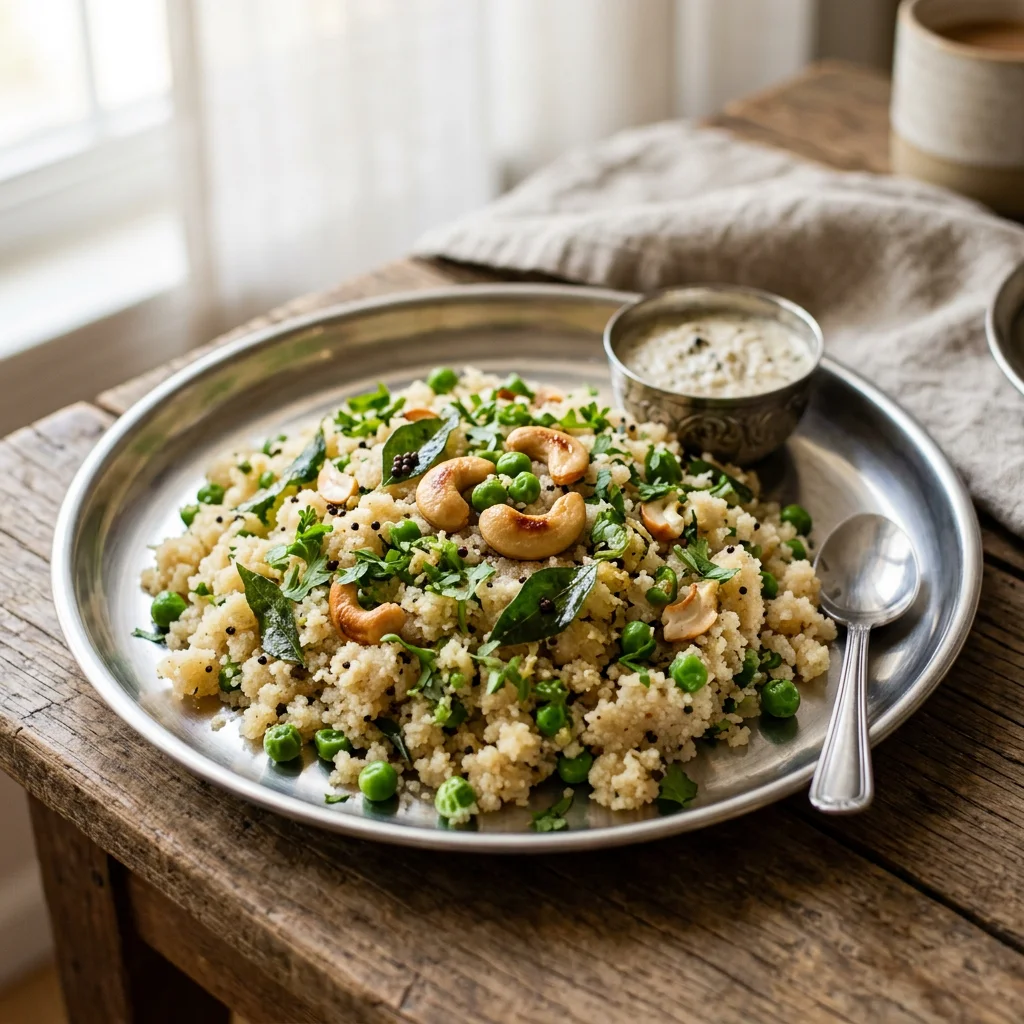
Overview
Upma is South India's answer to savory porridge — dry-roasted semolina cooked with vegetables, tempered spices, and a squeeze of fresh lemon. It appears on breakfast tables from Chennai to Bangalore and is equally at home as a quick evening tiffin. The dish comes together in under 15 minutes, making it one of the fastest traditional breakfasts in the Indian repertoire. The key to great upma lies in the dry-roasting of the semolina (rava or sooji) before cooking — this step develops a nutty aroma and prevents the finished dish from becoming gluey. The tempered spices and vegetables are cooked separately, then the roasted semolina is stirred into hot water with the vegetables and covered to steam. The result should be fluffy and light, with each grain distinct. Ayurvedically, semolina is a refined wheat product that is lighter than whole wheat but heavier than rice. Combined with the heating tempering spices, peanuts, and vegetables, upma provides quick energy with enough substance to carry through a morning. Its warm, slightly oily quality makes it particularly suited to Vata constitutions and cool mornings.
Balances Vata when prepared with generous ghee. Good for Kapha in moderate amounts due to lightness. May increase Pitta if too much chili is used.
Ingredients
- 1 cup Semolina (rava/sooji)
- 2 tbsp Ghee
- 1 tsp Mustard seeds
- 1/2 tsp Cumin seeds
- 1 whole Dried red chili (broken)
- 8-10 leaves Fresh curry leaves
- 2 tbsp Peanuts
- 1 small Onion (finely chopped)
- 1/4 cup Green peas
- 1 small Carrot (finely diced)
- 6-8 pieces Green beans (finely chopped)
- 1 tsp Fresh ginger (grated)
- 2.5 cups Water
- 3/4 tsp Salt
- 1 tbsp Lemon juice
- 2 tbsp Fresh cilantro (for garnish)
Instructions
- Dry-roast the semolina in a heavy pan over medium heat, stirring continuously for 3-4 minutes until it turns golden and fragrant. Transfer to a plate immediately to stop cooking.
- In the same pan, heat the ghee over medium heat. Add mustard seeds — when they begin to pop, add cumin seeds, dried red chili, and curry leaves. Stir for 10 seconds.
- Add peanuts and fry until lightly golden, about 1 minute. Add the chopped onion and ginger, cooking until the onion softens, about 2 minutes.
- Add carrots, green beans, and peas. Stir-fry for 2 minutes, then add salt and water. Bring to a rolling boil.
- Reduce heat to low and slowly pour the roasted semolina into the boiling water in a thin stream, stirring continuously with a fork or whisk to prevent lumps.
- Cover with a tight lid and cook on the lowest heat for 2-3 minutes. The semolina will absorb the remaining water and steam into fluffy grains.
- Remove from heat, let it rest covered for 1 minute, then fluff with a fork. Squeeze lemon juice over the top and garnish with fresh cilantro.
How This Recipe Affects Each Dosha
Vata
Semolina's warm, sweet, and grounding qualities are soothing for Vata when combined with sufficient ghee. The heating tempering spices and warm serving temperature make this an ideal Vata-season breakfast. The peanuts add protein and healthy fat that Vata needs.
Pitta
The heating spices (mustard, chili, ginger) can aggravate Pitta, though the sweet base of semolina provides some balance. The lemon adds a cooling sour note. Pitta types should moderate the spice level and increase cooling vegetables.
Kapha
Upma's light, dry quality is naturally suited to Kapha types who need drying, stimulating foods in the morning. The heating spices help kindle sluggish morning digestion. However, excess ghee counteracts these benefits.
The tempering spices strongly kindle morning agni. Mustard seeds and ginger are potent digestive stimulants. The light, warm quality makes this easy for sluggish morning digestion to process.
Nourishes: Rasa (plasma), Mamsa (muscle), Meda (fat)
Adjustments by Constitution
For Vata Types
Increase ghee to 3 tablespoons and add a pinch of asafoetida. Include sweet vegetables like sweet potato or beets. Top with a small pat of butter before serving. Use cashews instead of peanuts.
For Pitta Types
Omit red chili and reduce mustard seeds. Replace ginger with fennel powder. Add cooling vegetables like zucchini and fresh peas. Use coriander seeds in the tempering instead of mustard. Increase lemon juice.
For Kapha Types
Reduce ghee to 1 tablespoon and omit peanuts. Increase vegetables generously — add greens like chopped spinach or kale. Add extra black pepper and ginger. Keep the dish on the drier side by using less water.
Seasonal Guidance
Ideal for cooler months when a warm, spiced breakfast supports the body's natural need for grounding and warmth. In autumn and winter, make it richer with more ghee and nuts. In spring, keep it lighter with extra vegetables and less fat to counteract Kapha accumulation. During the heat of summer, this can be too warming as a daily breakfast — switch to lighter options like poha (flattened rice) or fresh fruit.
Best time of day: Breakfast or late afternoon tiffin. Best served immediately — upma does not hold well and becomes stiff as it cools.
Cultural Context
Upma is a cornerstone of South Indian breakfast culture, found in homes and tiffin rooms from Tamil Nadu to Karnataka. The word comes from the Tamil "uppu" (salt) and "maavu" (flour), meaning simply "salted flour." It belongs to a family of quick-cooked grain breakfast dishes that define South Indian mornings — alongside idli, dosa, and pongal. Every household has its own version; some add cashews and raisins for a sweet-savory contrast, while others pile in fresh coconut or curry leaves. It is quintessential comfort food — unpretentious, nourishing, and endlessly adaptable.
Chef's Notes
Stirring continuously while adding semolina to boiling water is non-negotiable — stop stirring and you get lumps. Use a fork rather than a spoon for fluffing; it separates the grains better. The ratio of 2.5 cups water to 1 cup rava produces a fluffy texture; use 3 cups for a softer, more porridge-like consistency. Leftover upma can be shaped into patties and pan-fried the next morning for a crispy variation. Cashews can replace peanuts for a more luxurious version.
Frequently Asked Questions
Is Vegetable Upma good for my dosha?
Balances Vata when prepared with generous ghee. Good for Kapha in moderate amounts due to lightness. May increase Pitta if too much chili is used. Semolina's warm, sweet, and grounding qualities are soothing for Vata when combined with sufficient ghee. The heating spices (mustard, chili, ginger) can aggravate Pitta, though the sweet base of semolina provides some balance. Upma's light, dry quality is naturally suited to Kapha types who need drying, stimulating foods in the morning.
When is the best time to eat Vegetable Upma?
Breakfast or late afternoon tiffin. Best served immediately — upma does not hold well and becomes stiff as it cools. Ideal for cooler months when a warm, spiced breakfast supports the body's natural need for grounding and warmth. In autumn and winter, make it richer with more ghee and nuts. In spring, keep it lighte
How can I adjust Vegetable Upma for my constitution?
For Vata types: Increase ghee to 3 tablespoons and add a pinch of asafoetida. Include sweet vegetables like sweet potato or beets. Top with a small pat of butter befo For Pitta types: Omit red chili and reduce mustard seeds. Replace ginger with fennel powder. Add cooling vegetables like zucchini and fresh peas. Use coriander seeds i
What are the Ayurvedic properties of Vegetable Upma?
Vegetable Upma has Sweet, Pungent, Sour taste (rasa), Heating energy (virya), and Sweet post-digestive effect (vipaka). Its qualities (gunas) are Light, Warm, Dry. It nourishes Rasa (plasma), Mamsa (muscle), Meda (fat). The tempering spices strongly kindle morning agni. Mustard seeds and ginger are potent digestive stimulants. The light, warm quality makes this easy for sluggish morning digestion to process.
What should you eat today?
This recipe has specific effects on each dosha, and the right meal depends on more than general guidelines. Your constitution, the current season, your birth chart's active planetary period, what you ate yesterday, how you slept — it all matters.
With Personal Alignment, you get daily food and meal guidance tailored to:
- Your prakriti and current vikriti
- Your Vedic birth chart and active planetary cycles
- The season, weather, and time of day
- Your food preferences, allergies, and restrictions
- Your feedback — it learns what works for your body and adapts
Not a generic diet plan. A living system that gets smarter about you every day.