Yataklete Kilkil
Ethiopian Recipe
Overview
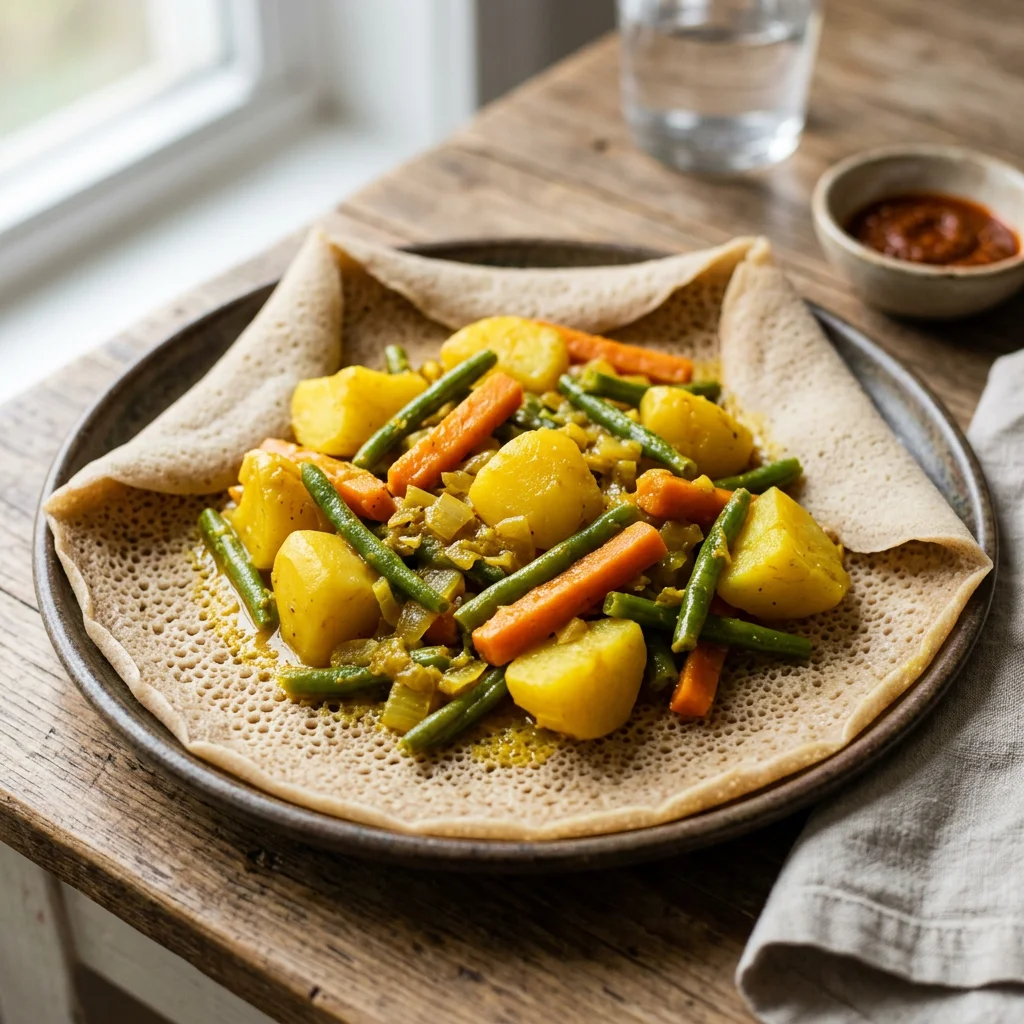
Yataklete kilkil is Ethiopia's turmeric-based mixed vegetable stew — a golden, fragrant, gently spiced braise of potatoes, carrots, cabbage, and green beans simmered in a base of onions, garlic, ginger, and generous turmeric. It is the premier fasting dish of the Ethiopian vegetable repertoire, appearing on every beyaynetu platter during the Orthodox fasting seasons and beloved year-round as a hearty, satisfying vegan main course. The name translates roughly to "mixed vegetables cooked gently," and the gentle part is key — this is not a fiery dish but a warm, golden, nourishing one. The beauty of yataklete kilkil lies in its restraint. In a cuisine where berbere commands center stage, this dish steps back and lets turmeric lead. The result is something closer to an Indian sabzi or a gentle curry than a typical Ethiopian wot — golden rather than red, warming rather than hot, nurturing rather than stimulating. Each vegetable is cut to a size that allows it to cook evenly while retaining its individual character: potatoes creamy, carrots sweet, cabbage tender, green beans snappy. Ayurvedically, this is one of the most therapeutic preparations in Ethiopian cooking. Turmeric is recognized across both Ayurvedic and Ethiopian herbalism as a powerful anti-inflammatory, blood purifier, and digestive support. Combined with ginger and garlic in a base of slow-cooked onions — the same aromatic trio found in Ayurvedic cooking — yataklete kilkil creates a preparation that is deeply aligned with Ayurvedic principles despite having evolved independently, thousands of miles from the Indian subcontinent.
Tridoshic with gentle modifications. Balances all three doshas due to the broad spectrum of tastes and the gentle, neutral preparation.
Ingredients
- 3 medium Potatoes (peeled and cut into 1-inch cubes)
- 2 large Carrots (peeled and sliced into rounds)
- 1/4 head Green cabbage (cut into 1-inch pieces)
- 150 g Green beans (trimmed and halved)
- 2 medium Red onion (sliced)
- 4 cloves Garlic (minced)
- 1 tbsp Fresh ginger (grated)
- 1 tsp Turmeric powder
- 3 tbsp Vegetable oil
- 1 tsp Salt
- 1/2 tsp Black pepper
- 1/2 cup Water
- 1 whole Fresh green chili (slit, optional)
Instructions
- Heat the oil in a large, heavy pot over medium heat. Add the sliced onions and cook for 5-6 minutes until softened and beginning to turn golden.
- Add the garlic, ginger, and turmeric. Stir for 1 minute until the mixture is fragrant and everything is coated in golden turmeric.
- Add the potatoes and carrots — the two vegetables that take longest to cook. Stir to coat with the turmeric-onion base. Add the water and optional green chili.
- Cover and cook for 10 minutes over medium-low heat, stirring once, until the potatoes are beginning to soften but are not yet cooked through.
- Add the cabbage and green beans on top. Season with salt and black pepper. Cover and continue cooking for another 12-15 minutes until all vegetables are tender.
- Remove the lid, gently stir to combine (being careful not to break the potatoes), and cook uncovered for 2-3 minutes to reduce any excess liquid. The stew should be moist but not soupy — the vegetables should hold their shape in a light, golden sauce.
- Adjust seasoning and serve warm on injera, either as the centerpiece of a fasting platter or alongside wots and other dishes.
How This Recipe Affects Each Dosha
Vata
The sweet potatoes and carrots, warm preparation, and oil provide grounding and nourishment for Vata. The turmeric and ginger offer gentle warmth without overheating. The variety of vegetables provides broad nutritional support. Potatoes, while heavy, help fill and stabilize erratic Vata appetite.
Pitta
The absence of berbere, minimal chili, and emphasis on sweet, starchy vegetables make this highly suitable for Pitta. Turmeric is anti-inflammatory, and the overall cooling-to-neutral virya avoids aggravating Pitta fire. One of the safest Ethiopian main dishes for Pitta constitutions.
Kapha
The potatoes and overall starchiness are the main concern for Kapha. However, the cabbage is light and drying, the green beans are astringent, and the ginger and turmeric support metabolism. With modifications (less potato, more greens), this becomes very Kapha-appropriate.
Gently supportive of agni through the ginger and turmeric, without the aggressive stimulation of berbere-based dishes. The starchy vegetables are easy to digest when well-cooked, and the turmeric specifically supports the liver's processing function. A moderate, balanced effect on digestive fire.
Nourishes: Rasa (plasma), Rakta (blood), Mamsa (muscle), Asthi (bone)
Adjustments by Constitution
For Vata Types
Use niter kibbeh instead of oil for added warmth and richness from the infused fenugreek and korarima. Add extra ginger and a generous pinch of black pepper. Include a sweet potato in place of one regular potato for its additional Vata-grounding sweetness. A pinch of nigella seed adds warmth.
For Pitta Types
Omit the green chili and reduce garlic to 2 cloves. Add extra cabbage and green beans for their cooling, astringent qualities. Use coconut oil for a cooling fat. This dish is already one of the most Pitta-friendly Ethiopian preparations.
For Kapha Types
Reduce potatoes to 1 or omit entirely. Double the cabbage and green beans. Use only 1 tablespoon of oil. Add a pinch of bishop's weed (ajwain) and mitmita for metabolic stimulation. Increase ginger to 2 tablespoons and add fenugreek powder. The lighter, greener version is an excellent Kapha meal.
Seasonal Guidance
Yataklete kilkil is appropriate year-round with minor adjustments. In autumn and winter, use niter kibbeh, add extra ginger, and include heartier root vegetables. In spring, lighten by increasing cabbage and green beans and reducing potatoes. In summer, keep the preparation gentle and emphasize the anti-inflammatory turmeric. The stew's neutral, balanced nature makes it one of the most seasonally versatile Ethiopian dishes.
Best time of day: Lunch or dinner — hearty enough for a main course at either meal
Cultural Context
Yataklete kilkil is the golden anchor of the Ethiopian fasting platter. During the Great Lent (Hudadi Tsom) — a 55-day fast observed by the majority of Ethiopian Orthodox Christians — this stew appears daily, providing essential nutrition and deep satisfaction without any animal products. The Ethiopian fasting tradition has given rise to one of the world's most sophisticated vegan cuisines, and yataklete kilkil exemplifies why: with nothing more than common vegetables, oil, and spices, Ethiopian cooks create dishes of remarkable depth and completeness. The dish also reveals the historical connections between Ethiopian and Indian cuisines — turmeric, ginger, and garlic form the same aromatic trinity in both traditions, a convergence born of ancient trade routes across the Indian Ocean.
Chef's Notes
The key to great yataklete kilkil is adding the vegetables in stages based on their cooking time — potatoes and carrots first, then cabbage and green beans. Overcooking produces mush; undercooking leaves hard potatoes. Check the potatoes at the halfway point and adjust timing accordingly. A pinch of nigella seed added with the turmeric adds a subtle, oniony complexity. For a richer non-fasting version, use niter kibbeh instead of oil — the infused spices (particularly the fenugreek and korarima) elevate this simple dish considerably. Some cooks add a peeled, halved hard-boiled egg to individual servings for added protein on non-fasting days.
Frequently Asked Questions
Is Yataklete Kilkil good for my dosha?
Tridoshic with gentle modifications. Balances all three doshas due to the broad spectrum of tastes and the gentle, neutral preparation. The sweet potatoes and carrots, warm preparation, and oil provide grounding and nourishment for Vata. The absence of berbere, minimal chili, and emphasis on sweet, starchy vegetables make this highly suitable for Pitta. The potatoes and overall starchiness are the main concern for Kapha.
When is the best time to eat Yataklete Kilkil?
Lunch or dinner — hearty enough for a main course at either meal Yataklete kilkil is appropriate year-round with minor adjustments. In autumn and winter, use niter kibbeh, add extra ginger, and include heartier root vegetables. In spring, lighten by increasing cabb
How can I adjust Yataklete Kilkil for my constitution?
For Vata types: Use niter kibbeh instead of oil for added warmth and richness from the infused fenugreek and korarima. Add extra ginger and a generous pinch of black For Pitta types: Omit the green chili and reduce garlic to 2 cloves. Add extra cabbage and green beans for their cooling, astringent qualities. Use coconut oil for a c
What are the Ayurvedic properties of Yataklete Kilkil?
Yataklete Kilkil has Sweet, Astringent, Pungent, Bitter taste (rasa), Neutral energy (virya), and Sweet post-digestive effect (vipaka). Its qualities (gunas) are Light, Warm, Slightly Moist. It nourishes Rasa (plasma), Rakta (blood), Mamsa (muscle), Asthi (bone). Gently supportive of agni through the ginger and turmeric, without the aggressive stimulation of berbere-based dishes. The starchy vegetables are easy to digest when well-cooked, and the turmeric specifically supports the liver's processing function. A moderate, balanced effect on digestive fire.
What should you eat today?
This recipe has specific effects on each dosha, and the right meal depends on more than general guidelines. Your constitution, the current season, your birth chart's active planetary period, what you ate yesterday, how you slept — it all matters.
With Personal Alignment, you get daily food and meal guidance tailored to:
- Your prakriti and current vikriti
- Your Vedic birth chart and active planetary cycles
- The season, weather, and time of day
- Your food preferences, allergies, and restrictions
- Your feedback — it learns what works for your body and adapts
Not a generic diet plan. A living system that gets smarter about you every day.