Year of the Fire Horse: when every tradition says the same thing
The rarest year in the cycle. Fire on fire.
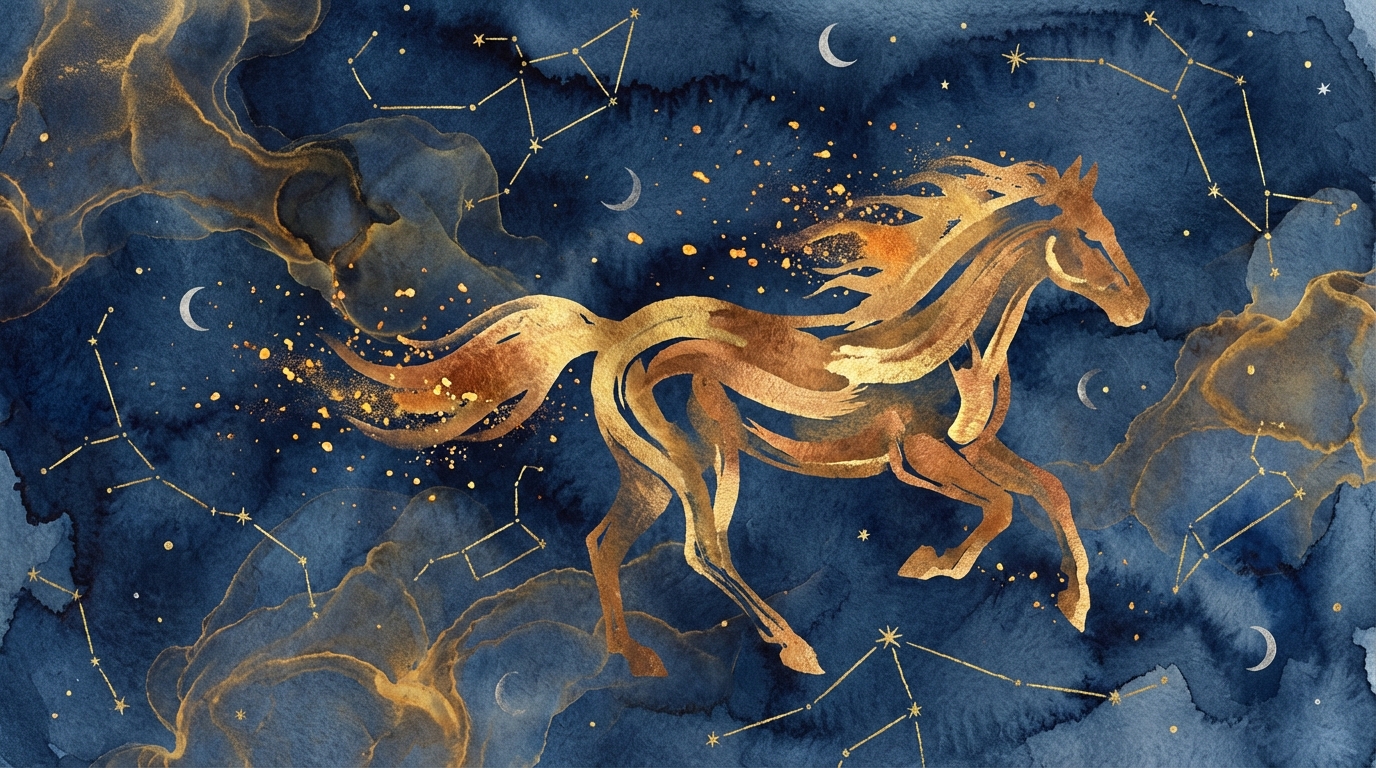
The last time Fire Horse energy moved through the world was 1966.
The counterculture ignited. The feminist movement found its voice. The National Organization for Women was founded. The Black Panther Party formed. Systems that had been locked in place for decades broke open - not because they were attacked, but because the fire made them impossible to ignore.
In Japan, 500,000 fewer babies were born that year. Not because of famine or war, but because of a four-hundred-year-old belief that women born in Fire Horse years are too powerful to contain - too passionate, too independent, too fierce. Families chose not to conceive rather than risk a daughter born under this sign.
Now the Fire Horse is back. It won’t return until 2086.
The sixty-year cycle
The Chinese zodiac operates on a sixty-year cycle - the sexagenary cycle - created by the intersection of twelve animals and five elements. Each animal carries a native element: the Horse’s is fire. So a Fire Horse year is the only moment when the Horse meets its own element. Fire on fire. The most intensely Yang combination in the entire cycle.
Where other Horse years carry fire tempered by water, wood, metal, or earth, the Fire Horse is untempered. Its energy is rapid movement, bold action, and purification. What no longer fits becomes harder to hold onto. What matters comes into sharp focus.
This is not abstract symbolism. The 60-year cycle means that Fire Horse years land roughly once per human lifetime. You lived through one, or you didn’t. The previous Fire Horse years - 1906, 1846, 1786 - each mark periods of dramatic transformation: the San Francisco earthquake and reformation movements, revolutionary upheavals across Europe, the years immediately following the American and French revolutions.
The Vedic horsemen
What makes 2026 remarkable is that the horse carries meaning across every wisdom tradition Satyora draws from - and they all say essentially the same thing.
In Jyotish, the first of the twenty-seven nakshatras is Ashwini - literally “the horse’s head.” It is ruled by the Ashvini Kumaras, twin divine horsemen who serve as physicians to the gods. Their gift is shighra vyapani shakti: the power to reach things swiftly. Speed and healing, beginnings and restoration.
Ashwini marks the very start of the zodiac - zero degrees of Mesha (Aries). It is the nakshatra of dawn, of first breath, of things that arrive quickly because the moment is ready for them. The Ashvini Kumaras are eternally young, riding golden horses across the sky at the first light of morning. They restore sight to the blind, youth to the aged, limbs to the maimed. Their medicine is not slow - it is the sudden recognition that healing was always available, waiting only for the right moment.
In a Fire Horse year, this Ashwini energy is amplified across the entire twelve months. The horsemen ride all year.
The Wind Horse
In Tibetan Buddhism, the lungta - the Wind Horse - sits at the center of every prayer flag. If you’ve seen those strings of colored flags fluttering on mountain passes and temple rooftops, the horse is there in the middle square, galloping through the sky, carrying a wish-fulfilling jewel on its back.
The five colors of the flags represent the five elements: blue for space, white for air, red for fire, green for water, yellow for earth. The Wind Horse moves through all of them, carrying prayers from earth toward heaven. When your lungta is strong, positive energy moves freely through your life. When it weakens, obstacles multiply.
The Tibetan tradition teaches specific practices for raising lungta - burning juniper, hanging fresh prayer flags, performing sang offerings - and considers certain years especially potent for this work. A Fire Horse year, with fire’s natural upward movement, amplifies the Wind Horse’s power. Prayers travel faster. Intentions carry further. The obstacles that ordinarily slow transformation thin out.
Losar - Tibetan New Year - falls on February 18 this year, just one day after the Chinese Lunar New Year. Two great traditions marking the same horse-carried threshold within twenty-four hours.
Universal Year One
In Western numerology, 2026 reduces to a Universal Year 1 (2+0+2+6=10, 1+0=1). After 2025’s Year 9 - a year of endings, release, and completion - Year 1 is the clean slate. The first year of a new nine-year cycle. What you plant now shapes the next decade.
Year 1 energy favors initiation over continuation. Starting over establishing. The uncomfortable first step over the comfortable next one. It doesn’t ask what you’ve been doing - it asks what you’re willing to begin.
Combined with Fire Horse momentum, this creates a year where the cost of hesitation is unusually high and the reward for action is unusually swift. Not reckless action - the Horse, for all its fire, is a creature of awareness, one of the most perceptive animals in the zodiac. But decisive movement. The kind of beginning that has weight behind it.
The fire traditions
Fire itself is sacred across every tradition Satyora explores.
In the Vedic world, Agni is the first deity invoked in the Rig Veda - the divine fire that serves as messenger between humans and gods, consuming offerings and carrying them upward. The concept of tapas - the fire of disciplined practice - describes transformation through sustained heat, the way raw ore becomes refined metal.
In Buddhism, the Fire Sermon (Adittapariyaya Sutta) was one of the Buddha’s most important early teachings. “All is burning,” he declared - the senses, their objects, consciousness itself - and the path to liberation passes through understanding this fire rather than being consumed by it.
In Taoism, fire is the element of the south, of summer, of the heart. The alchemical tradition speaks of lian dan - refining the elixir - using inner fire to transform base consciousness into something luminous.
A Fire Horse year doesn’t add fire to a world that lacks it. It intensifies what is already burning. It makes it harder to pretend that what is hot is cool, that what is urgent is distant, that what demands attention can wait.
How to ride the Fire Horse
The Fire Horse doesn’t reward hesitation - but it doesn’t reward recklessness either. The Horse is not a bull charging blindly. It is alert, fleet, responsive. It moves fast but it sees where it’s going.
Clear what’s stale. Deep clean your space. Settle unresolved debts, conversations, commitments. The Fire Horse amplifies what’s present - if clutter and stagnation are present, they get amplified too. Start fresh.
Set intentions from your body, not just your mind. Fire Horse energy lives in the gut, the heart, the legs. The mind produces plans; the body knows direction. What do you feel pulled toward? Where does energy want to move? The Horse doesn’t read maps. It knows the way.
Ground the fire. This much Yang energy needs earth to hold it. Daily routine, warm food, bare feet on the ground, slow breath. Fire without containment becomes wildfire. Fire within a hearth becomes warmth, light, the center around which life gathers. The Ayurvedic approach to fire - tending agni through regular meals, proper rest, and seasonal living - applies doubly in a Fire Horse year.
Begin something real. Not a resolution. Not a plan to make a plan. A first step with weight behind it. Fire Horse years favor action over preparation, the imperfect beginning over the perfected intention. What have you been circling? Start.
Move with the fifteen days. The Lunar New Year celebration runs through March 3, culminating in the Lantern Festival. You don’t have to land everything on day one. Let the fire build. Use the first days for clearing, the middle days for setting intention, the final days for beginning in earnest.
The superstition and the truth
The Japanese hinoeuma superstition - that Fire Horse women are too powerful, too willful, too dangerous - contains an accidental truth wrapped in fear.
Fire Horse energy is intense. It does amplify independence, passion, and the refusal to be contained. The 1966 babies who survived the superstition grew up to become exactly what their culture feared and needed: people who questioned systems, challenged assumptions, and moved with extraordinary force.
The question a Fire Horse year poses is not whether you can handle the fire. It’s whether you’re willing to stop dampening it.
Every tradition represented here - Chinese, Vedic, Tibetan, Western - describes the same invitation arriving through different doorways. The Horse runs. The Ashvini Kumaras heal at the speed of dawn. The Wind Horse carries prayers to heaven. The year begins fresh.
The fire is already lit.
For today’s specific alignment - where Fire Horse energy meets the Vedic sky, the moon’s rhythm, and practical guidance for the day - visit Today’s Alignment. To explore the Vedic horsemen in depth, see Ashwini Nakshatra. For understanding fire in the Vedic tradition, see Tapas: The Fire of Practice and Agni: The Digestive Fire.